Skilled Trades/Contractors

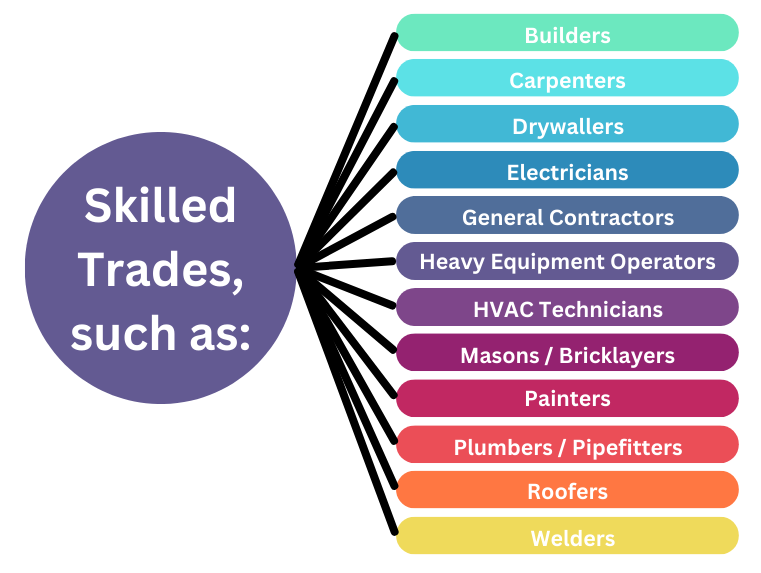
We have worked with clients in many sectors, including but not limited to:
 

Union Skilled Tradesworkers

Union Skilled Tradesworkers

Union skilled tradespeople typically enjoy stable pay with structured wage increases, health benefits, and retirement plans. However, they should plan for fluctuations in income during downtime or off-seasons and ensure they take full advantage of union-provided financial resources like pension plans and health savings accounts.

Non-Union Skilled Tradesworkers

Non-Union Skilled Tradesworkers

Non-union skilled tradesworkers often have more control over their earnings, but must proactively manage their finances due to inconsistent work or project-based income. They should focus on building an emergency fund, securing their own health insurance, and setting up a retirement plan like an IRA to ensure long-term financial stability. 

Pensions

Pensions provide a guaranteed income stream in retirement, typically funded by employers.


Union employees often have access to pensions, which offer long-term security, but non-union workers need to be proactive in building their own retirement savings if they don’t have this benefit.

Retirement Plans

Retirement plans like SEP, SIMPLE, and 401(k) plans help skilled tradesworkers save for the future with tax advantages.


Company-sponsored plans often offer matching contributions, but workers who are self-employed or do not have employer-sponsored plans should set up their own individual retirement accounts (IRA) or other personal retirement savings options.

Social Security

Social Security provides a safety net for retirees, offering monthly payments based on lifetime earnings.


Skilled trades workers should consider strategies to maximize their Social Security benefits. Delaying claims until full retirement age or beyond ensures they receive the highest possible payout.

Case Study

Contractor

Contractor

  • Family-owned business
Sellers - Married

Sellers - Married

  • Jane, 56 years old, owns 50%
  • Joe, 59 years old, owns 50%
Buyer - Daughter

Buyer - Daughter

  • Zoe, 35 years old

Gross Revenue

$8,000,000

Purchase Price

$2,575,000

Cost Basis


$16,000

Potential Taxes Owed

$850,000

Goal

Goal

  1. Transfer the ownership in a tax-efficient manner.
  2. Jane & Joe would like to receive an income stream over time, and in the future if possible.

Original Plan

  • Buyout - $2,575,000
    • $2,575,000 - Installment payments 
      • Almost 100% of the payments would have been considered taxable to Jane & Joe
      • Zoe cannot deduct the principal portion of the installment payments

Updated Plan

  • Buyout of $2,575,000
    • $1,000,000 - Company equity was transferred tax-free
    • $1,575,000 - Installment payments
      • Annual installment payments were made over five years
      • $1,400,000 is tax-deferred until Jane & Joe turn 72 years old
      • $175,000 is taxable
      • Zoe can deduct 100% of the installment payments

This is a case study for illustrative purposes and should not be construed as a recommendation. It may not be representative of your experience